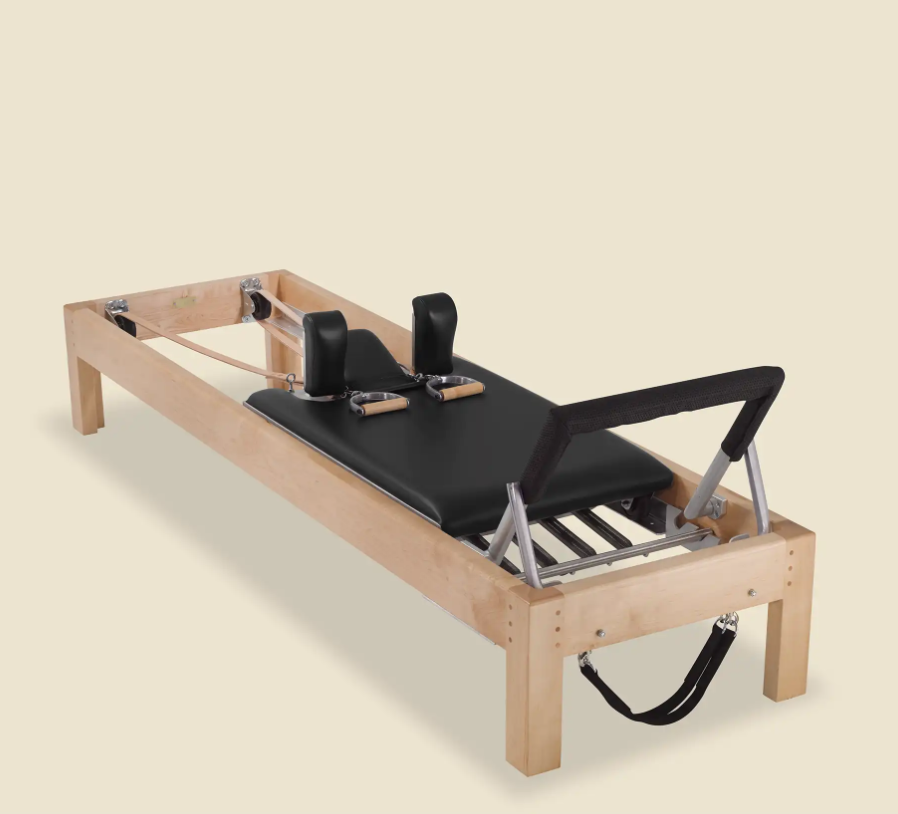
Gratz is the name most closely associated with classical Pilates equipment: the original manufacturer that built Joseph Pilates’ own designs, and the brand still used by many of the method’s most traditional teachers and training programs today.
For a studio owner comparing equipment brands, Gratz sits in a different category from mass-market manufacturers like Balanced Body or Merrithew: it is a heritage, made-to-order brand built around fidelity to the original apparatus rather than modern reinterpretation.
History
Gratz was founded in 1929 in New York City by MIT-trained engineer Frank Gratz and business partner Edward Treitel, originally as Treitel-Gratz Co., Inc., a custom metalworking and furniture fabrication shop known for architectural metalwork and furniture for top designers. Joseph Pilates himself commissioned Frank Gratz to manufacture his exercise apparatus in metal, moving away from the wood equipment Pilates had built himself.
In the late 1960s, Frank’s son Donald Gratz began working with Romana Kryzanowska, Joseph Pilates’ protégé and chosen successor, to fabricate apparatus true to Pilates’ original designs. That collaboration made Gratz the first, and for decades the only, manufacturer of classical Pilates equipment built to Joseph Pilates’ own specifications. Romana relied exclusively on Gratz apparatus for her own studios and training programs, cementing the brand’s status within the classical Pilates world.
David Rosencrans joined as managing partner in 2006, reinforcing the company’s industrial design focus under the motto “Joe invented it. Gratz makes it.” After more than 80 years based in New York, Gratz moved production to Philadelphia in 2014. In June 2024, longtime classical Pilates practitioners and Gratz customers John Riccitiello and Elizabeth Osterman became the company’s new owners, with a stated goal of preserving its craftsmanship while reducing delivery lead times and expanding global access to the equipment.
Market Positioning
Where Balanced Body and Merrithew build for a broad commercial and rehabilitation market, Gratz positions itself as the sole keeper of the classical method’s original apparatus. Its marketing is built around authenticity rather than innovation: every piece is described as staying true to Joseph Pilates’ own dimensions, spring tension, and mechanics, not a modern reinterpretation of them.
This makes Gratz the default choice for classically trained teachers and studios that teach the full, traditional Pilates repertoire in order, rather than group reformer fitness classes. Each Gratz piece is built to order by hand in Philadelphia, by a small team of machinists, upholsterers, welders, and woodworkers, a process that reinforces the brand’s craftsmanship positioning but also means longer lead times than mass-produced competitors, something the current owners have been actively working to shorten.
Product Range
The Gratz catalog covers the full classical Pilates apparatus system:
Reformers — available as the Universal Reformer and the Archive Reformer, a vintage-specification edition reintroduced in 2018 that recreates the feel and dimensions of the earliest Gratz-built Reformers.
Cadillac and Reformer-Cadillac combos — a traditional aluminum-and-maple-wood Cadillac, plus Full and Half Cadillac conversion kits that turn a Reformer into a combination apparatus.
Guillotine Tower and Studio Wall Unit — wall-mounted apparatus for smaller spaces.
Chairs — Wunda Chair, Small Arm Chair, Electric Chair, and a Combo Chair that merges the Wunda and Electric Chair functions.
Barrels — Ladder Barrel, Spine Corrector, and a Small Barrel.
Mats, a Pedi Pole, and a range of accessories and spare parts, including springs, wheels, handles, hooks, and upholstery, sold directly to owners of existing Gratz equipment.
Main Models
Universal Reformer — Gratz’s core, current-specification Reformer, used as the standard apparatus in most classical studios equipped with the brand.
Archive Reformer — a reissue of the original-era Gratz Reformer, built to match the specifications and feel of the equipment used in Joseph Pilates’ and Romana Kryzanowska’s own studios.
Wunda Chair — the brand’s standard Pilates Chair, one of the most recognizable pieces of classical apparatus.
Electric Chair and Combo Chair — chair variants used for a wider range of chair-based exercises, with the Combo Chair combining Wunda and Electric Chair functions in one piece.
Aluminum and Maple Wood Cadillac — the brand’s traditional full-size Cadillac, also available as an instant conversion added to a Reformer.
Who Gratz Is For
Gratz’s positioning narrows its audience compared with more general equipment brands:
Classically trained teachers and studios that teach the traditional, full-repertoire Pilates method in the order Joseph Pilates designed it, rather than group fitness-style reformer classes.
Training programs and teacher-training studios that want apparatus matching the original specifications students are taught to work on.
Studio owners prioritizing heritage, authenticity, and long-term durability over speed of delivery or lowest up-front cost.
Buyers comfortable with made-to-order lead times and a premium price point in exchange for hand-built, US-made equipment.
Advantages and Limitations
Advantages:
The only manufacturer with a direct, unbroken lineage to Joseph Pilates’ original equipment specifications, reinforced by its historical ties to Romana Kryzanowska.
Hand-built in Philadelphia using traditional materials and methods, which appeals strongly to classically trained instructors and purist studios.
Wide catalog covering the full classical apparatus system, including pieces like the Guillotine Tower and Electric Chair that some other brands don’t offer.
Ships to more than 170 countries despite being a relatively small, artisanal manufacturer.
Limitations:
Made-to-order production means longer lead times than mass-manufactured competitors, though the current ownership has been working to bring this down to under three months.
Premium pricing reflects the hand-built, small-batch production model, which can put Gratz out of reach for budget-conscious studios or home buyers.
Its equipment is built around the classical method specifically, which makes it a less natural fit for studios running group, fitness-oriented reformer classes rather than traditional one-on-one or small-group classical sessions.
The change in ownership in 2024 is recent enough that its long-term effect on production capacity and lead times is still playing out.
Source: Information compiled from Gratz Pilates’ official website (gratzpilates.com) and independent industry coverage. Last verified: July 2026.